Untitled
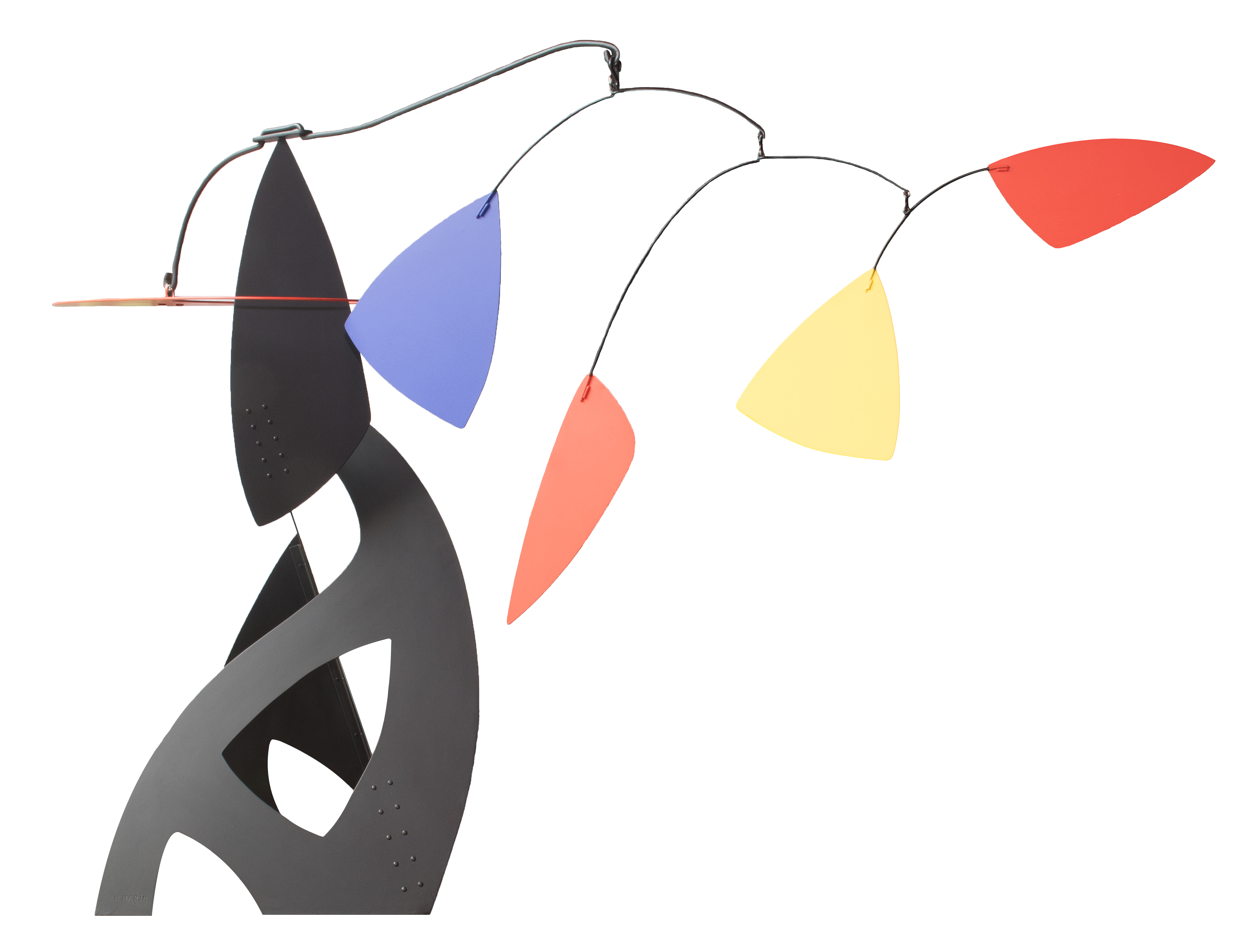
Marín, Manuel
1942, Cieza, Murcia - 2007, Alhaurín de la Torre, Málaga
Untitled, 2005 (Sin titulo)
Signed on the base: "M. Marín"
Carmen Thyssen-Bornemisza Collection.
Mobile sculpture on painted metal
163 x 255 x 80 cm
CTB.2014.12
Artwork history
-
Ansorena Auctions, Madrid, n. 349, Lot 871, May 2014.
-
Carmen Thyssen-Bornemisza Collection.
-
– KHRÔMA. El Universo emocional del color. Museu Carmen Thyssen Andorra [Exhib. Cat.], Ed. Fundació Museu Andorra (Museand), Principado de Andorra, 2023. P. 52, 53, 122, 196 y 197 [Sheet by María Luisa García Serrano].
Expert report
Manuel Marín is undoubtedly one of the most important Spanish sculptors of the 20th century. His training began in London around 1962, as an assistant of the sculptor Henry Moore, although the artist’s true inspiration carne from the sculptor Alexander Calder, who he met after moving to New York in 1964. lnfluenced by Calder’s kinetic sculptures, Marín created his first metal mobile object sculptures (mainly iron and steel) in 1969 and had his first exhibition at the Alan Brown Gallery in New York in 1970 (1).
A prototype of Marín’s mobile sculpture is the work in the Carmen Thyssen Collection, Untitled from 2005. The base is of sheets of flat perforated metal attached to an upper structure in the form of a curved metal arm from which the mobile geometrical parts are suspended in the air. In a kind of coloured metal tree, the parts are balanced to maintain the static form that can become dynamic and even emit sound at the slightest current of air. The large-scale composition conveys lightness and dynamism, colourful art in motion. The hanging geometrical metal parts, with their smooth, bright surfaces, are primarily painted in four colours: black, red, blue and yellow. This use of colour is not incidental but the influence of the Spanish artist Joan Miró, whose work greatly impactad Manuel Marín.
Although sorne of Marín’s works show figurative similarities to animal shapes, they mostly represent geometric shapes such as squares, circles, rhomboids or various perforated shapes. The sculptures might be supported on the ground on a base structure or hang from the ceiling so that the arms are suspended with the geometric shapes attached to them.
The sculptures can vary in size, from small to medium for interior decoration, to large sculptures over five metres high which deco¬rate squares and gardens around the world, making Manuel Marín one of the leading sculptors of outdoor mobiles. These sculptures become another part of the urban landscape and often an important, distinctive feature of the city. Notable examples are Comunicación Cruzada (Cross-Communication), 2006, in front of the Deutsche Welle building in Schürmann-Bau, Bonn, or La Gacela (The Gazelle) and the so-called Pájaro Loco (Crazy Bird), both located in public areas of the Malaga town Alhaurín de la Torre, where the artist spent the last few years of his life. The work of Manuel Marín also gained major popularity around the world, especially in Europe and the USA, where pieces have come up for sale in the foremost auction houses (2).
María Luisa García Serrano
—————————————-
(1) Manuel Marin official blog: www.esculturamanuelmarin.blogspot.com
(2) Manuel Marín. Lot 130 & 320. Bonhams Auction 24 October 2007, London, Knightsbridge. www.bonhams.com/auctions