Sphere 5188
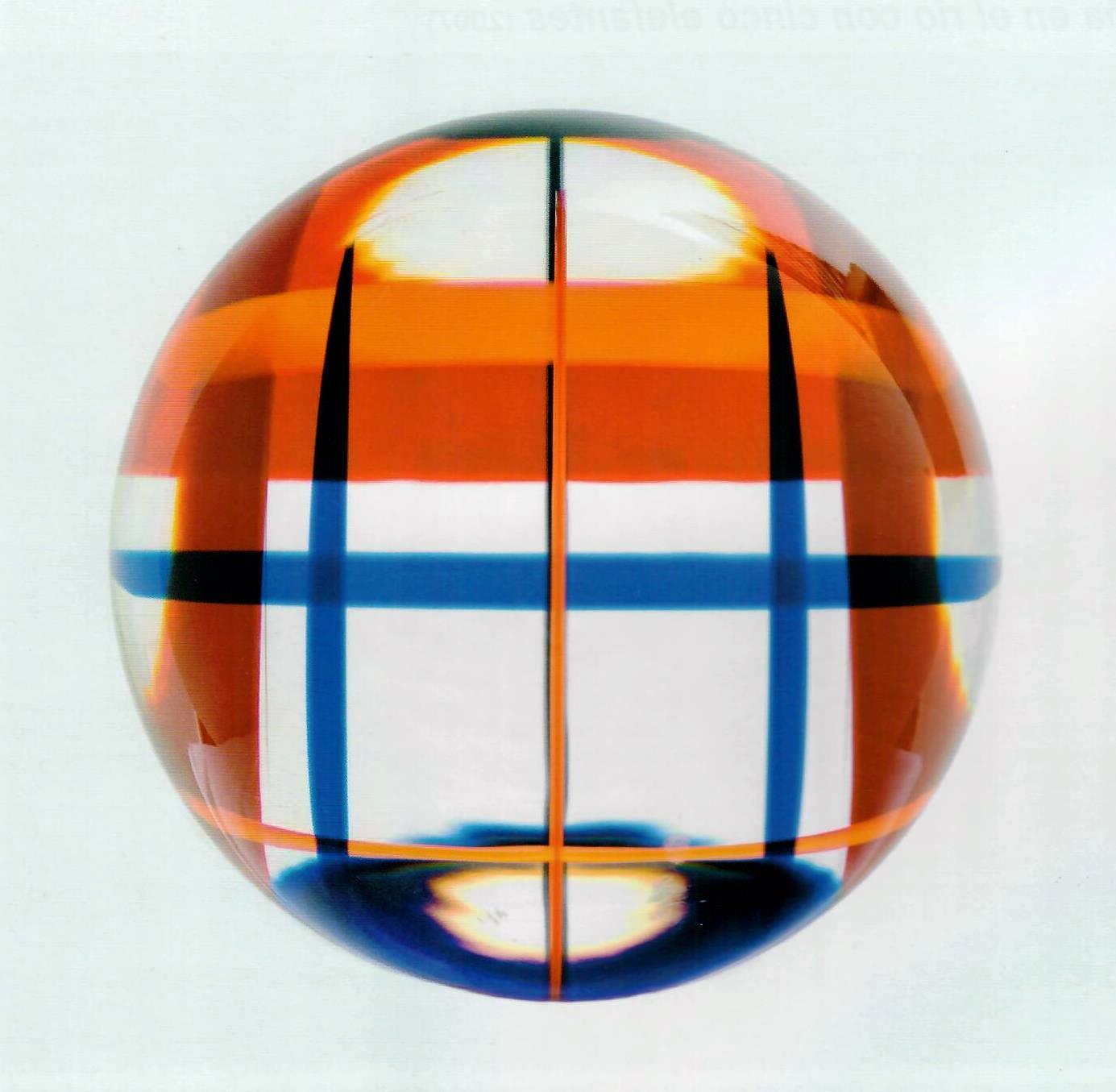
Vasa, (Velizar Mihich)
1933, Yugoslavia
Sphere 5188, 1988
Carmen Thyssen-Bornemisza Collection
Laminated cast acrylic
Diameter 30 cm
DEC1729/K1046
Artwork history
-
DeVorzon Gallery, Los Angeles, July 1988
-
Carmen Thyssen-Bornemisza Collection
-
– KHRÔMA. El Universo emocional del color. Museu Carmen Thyssen Andorra [Exhib. Cat.], Ed. Fundació Museu Andorra (Museand), Principado de Andorra, 2023. P. 78, 79, 136 y 218 [Sheet by Núria Parés].
Expert report
Commentary of the picture:
In his early days as a sculptor, Vasa created painted three-dimensional constructions, but from 1967, he decided to work only in acrylic, with the help of special machinery and technology in his workshop in Los Angeles (California). His peculiar technique is the hallmark of his sculptures. Through a meticulous, complex method,Vasa processes acrylic blocks which the enhances with colour to transform them into translucid coloured figures of different sizes, either individual or in series.
Vasa’s initial motivation was to place coloured pieces in open spaces, so he started by creating this kind of structure that reflects and refracts the light. To reach the final creation, the artist superimposes multiple layers of laminated acrylic in different colours to obtain the desired contrast. After shaping the piece and polishing to obtain a flawless shiny surface, Vasa’s sculptures convert colour into perfectly-executed geometric shapes. In his repertoire, we encounter cubes, triangles, pyramids, rectangular blocks, columns and spheres.
This work is one of the largest spheres produced by this artist. Creating spheres is much more complex than other shapes because they present specific difficulties and results, unlike flat pieces. Also, due to the relationship between the internal colours and light, the sphere adds new optical dimensions that create remarkable effects. In the case of Sphere 5188 in the Carmen Thyssen Collection, we can see different colours and positions of layers based on the spectator’s viewpoint of the sculpture. lnside the sphere of transparent acrylic are various combinations of perfectly-aligned, coloured layers and other meticulously-placed transversal layers. The position of the spectator determines whether they see the group of orange and blue layers or the group of blue and red layers or even all the layers which, seen together, farm a core of shifting colours that appear to be in motion.
For Vasa, it is vital to achieve this interaction between the spectator and the artwork, whereby the combinations of coloured planes in the different sections of the sphere transcend into a dynamic sculpture that is the hallmark of the artist.
Núria Parés